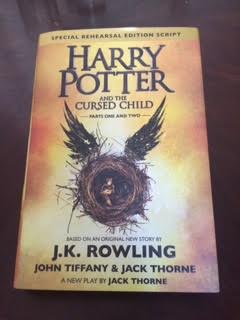
Book Review – “Harry Potter and the Cursed Child” by J.K. Rowling, John Tiffany, and Jack Thorne

Cursed ChildI’m not going to reveal any Cursed Child spoilers here. I don’t want to ruin it for people who haven’t experienced the story for themselves. But there are a lot of things that happen in this script, so I will delve into the plot some. If you haven’t read the story yet and want to be totally surprised when you do, skip this review for now.

When Harry Potter and the Deathly Hallows was published in 2007, I was reasonably satisfied with the ending, but devastated that the series had finally ended. At the time, I was honestly kind of disappointed that the series concluded with Harry, Ron, and Hermione all grown up and sending their own children off to Hogwarts – I wanted to see what life was like a year after The Battle of Hogwarts, how they were adjusting, how the wizarding world had changed. I almost felt robbed of the ending I felt I deserved, and resentful that the distant future had already been laid out for me – I wanted to be the one to imagine what happened as they grew older, I wanted to decide their fates and the names of their children (I love J.K. Rowling, but “Albus Severus”? I can’t get over that mouthful. And seriously, what pressure to put on a little kid!) But in retrospect I realize that my feelings stemmed from my own desire to see the possibility of the trio’s adventures continue – a need for the story to not really be over.

Well, little did I know that the story was indeed not really over. When I found out that there was a sequel coming out in play format, I was simultaneously excited and apprehensive. I’ve often thought about how lucky I am to have grown up with these characters, to wait for the books to be released and witness history happening, to finally be alive at the same time as a favorite author and to see her clear up any ambiguities or misconceptions about the universe and characters she created. I was excited and grateful for the privilege of getting to see the author create more content in the here and now. But another part of me said “let sleeping dogs lie.” I had accepted the ending of the series and didn’t want the story to be tarnished. But, obviously, my curiosity won out, and I somehow managed to walk right in and pick up a copy of the book/script at Target on the day it was released (everywhere else was sold out and had people waiting on orders – FYI, always try Target!).

I was immediately surprised and pleased to find that story picks up exactly where Deathly Hallows leaves off, with Harry, Ginny, Hermione, Ron, and Draco dropping their kids off at Platform 9 ¾. At this point, Harry is a man stretched too thin – he has too much work to do at the Ministry, is trying to be a good parent with almost no example to follow, and is still navigating the trappings of a celebrity life he never asked for. Ron is still Ron – irreverent, always eating, always a beat behind, but still a strong and loyal friend. And Hermione is the freaking badass she always was, wielding the strength and authority she was always destined to wield. (I pumped my fist and shouted when I found out where she had ended up, career-wise.)

The Potters, Weasleys, and Grangers are all related at this point, so their kids are all brothers, sisters, and cousins, and there are too many of them for me to keep up with, honestly. But the story centers on Albus, Harry’s youngest boy, and Scorpius, Draco’s only son, who strike up an unlikely friendship on their first train ride to Hogwarts. Albus is the most like Harry (kind and unsure, but bold, reactive, and hotheaded at times) and, of Harry’s three kids, feels the pressure of his father’s accomplishments to most. Scorpius is witty, very intelligent, and instantly likeable (he’s basically Ron and Hermione combined, oddly enough), but bears the weight of coming from a family of former Death Eaters, and of his father’s expectations for a type of greatness he’s not sure he’s capable of. So these two boys bond over their shared “outcast” status. The story jumps years at a time, and we witness Albus grow closer to Scorpius as he drifts further from Harry.

It has to be mentioned that Harry is, unsurprisingly, suffering from Post-Traumatic Stress Disorder. We are subtly and sadly reminded that he grew up in an abusive home, that his whole existence has been riddled with struggles, that things will probably never be easy for him, and that his demons will never truly leave him. So, on top of everything else, as the distance between Harry and Albus widens, Harry starts to experience pain in his scar again. Uh-oh.

When Albus is about to begin his fourth year, a Time-Turner prototype is recovered from dark wizard Theodore Nott’s home. Because all of the Time-Turners were thought to have been destroyed during the battle at the Ministry of Magic, this is a huge discovery. Of course, rumors start to fly, and Amos Diggory pays a visit to the Potters’ home, with his niece and caretaker Delphi in tow. While Harry refuses to even acknowledge to Amos that a Time-Turner exists, Albus hatches a very Harry-like plan to, with the help of Scorpius and Delphi, right some “wrongs”. Unfortunately, Albus, Scorpius, and Delphi are no Harry, Ron, and Hermione, and there is no Dumbledore to oversee their shenanigans…. Yikes. Suffice it to say that things go very, very wrong.

I won’t go any further plot-wise, for fear of ruining the spectacular, gut-wrenching ending. But I will say that although I’ve never understood the love for and obsession with Draco Malfoy that many people have (I find it kind of disturbing, as he was an incredibly cruel, unsympathetic character for about 6 books, and imagine it has something to do with good-looking Tom Felton’s portrayal in the movies), in this play we see Draco in a new and forgiving light. I suppose there was always a kernel of good in there, and his goodness is allowed to grow and shine here. I actually ended up really liking the sucker. Who would’ve thought? Also, I laughed a lot, felt a true and profound sadness for Harry, and cried twice while reading: once during a scene between Harry and Dumbledore’s portrait, and once very close to the end. I’ll leave it at that.

If you love the wizarding universe and you haven’t managed to or wanted to or really felt compelled to read this, please do so. I was ambivalent at first, but I was so moved and satisfied by this addition to the series. The only thing that would make it better would be seeing how they manage to pull all of this off on a stage.


Recommended For:

Potterheads who can’t afford to fly to London to see the play, but feel like getting their little hearts ripped out again by words on paper.
5 Books That Changed My Life

I just got back from a little summer vacation in the tiny, sleepy, hot-as-hell, artistic town of Marfa, TX. The trip afforded me lots of free time, especially because the WiFi in the casita where my beau and I were staying was not the best (which was decidedly for the best). Almost everything in Marfa closes at around 8pm, so there was plenty of time to sit back and catch up on some books I’ve been needing to finish. I even had time to delve into a new, weird “children’s” book that I’m not totally certain is actually for children.

There was also a lot of quiet time for me to chill out and contemplate my life – specifically where mine is going at this very moment. I quit my 8 year, steady job about 8 months ago, and I’m trying to decide exactly what I want to do now. This break from steady work brings up a lot of things that I never really had time to think about when I was working my butt off every day, and I’m trying to decide in what direction I’d like my life to go. I’ve been freelancing and thinking about the things and creative pursuits I love the most, and attempting to decide how to make them into careers. In these ruminations, I’ve realized that if I know one thing, it’s that I love books. They have made an enormous impact on my life, so much that I might even venture to say that books are basically my life. So this thought pattern led me to evaluate which individual books have changed the course of my life over the years (maybe in the hopes that I’ll stumble across another one that will knock me onto the correct path).

It’s undeniable that every book I’ve ever read has changed me in one way or another, but there are really only a handful of books that I can say have truly changed the trajectory of my life. Today I thought I’d share these books as a way to sort of commemorate where I’ve been. Though I wouldn’t say that these are my all-time favorite books or anything, they have absolutely each altered my world at some point in my life.

I’ve listed these books in my own personal chronological order, from the first I discovered to the latest ones to affect me.

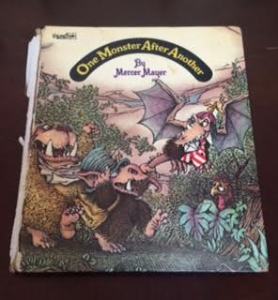
1) One Monster After Another by Mercer Mayer

 One Monster After AnotherThis is the first book I learned to read by myself. I was very close to my grandmother, and she was a voracious reader who passed her love of literature on to me. She spent her retirement watching me, my sister, and my two cousins while our parents were at work, and it was in this time that she taught 3- or 4-year-old me (obviously can’t remember the exact age) to read. I remember sitting on Grandmother’s lap and making her read One Monster After Another to me over and over while I turned the pages and memorized all of the words. I read this story about one letter’s fantastical, roundabout journey until I made the connection between letters and words, and could read the book on my own. As you can see, my copy of this book has been read to death, and I imagine it will only get worse if I ever have children. I don’t care. I’m keeping it forever. It jump started my life’s passion.


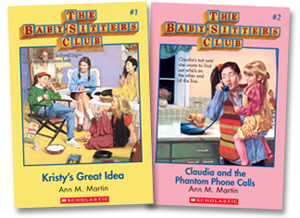
2) The Baby-Sitters Club Series by Ann M. Martin 

http://www.publishersweekly.com/pw/by-topic/childrens/childrens-book-news/article/54772-scholastic-releases-baby-sitters-club-e-books-with-classic-covers.html
publishersweekly.com

Yes, this is a series and not an individual book. As a kid, I was absolutely OBSESSED with the Baby-Sitters Club books. It’s the first book series that I ever started collecting, and it was at this point that I distinctly remember starting to carry a book (usually more than one) with me at all times to read. Reading this series also helped me acquire the skill of being able to keep story lines separate and read more than one book at a time. But what was the most revelatory for me about this series is that it definitely shaped my views on girls and on female friendship. The main characters in these books are strong, diverse, enterprising girls who know what they want and work for it. They are cool, creative, and smart, and I wanted to be all of them (except Mallory, who I suspected was unfortunately the most similar to me). They also drove home that women and girls should support one another instead of tearing each other down, the latter of which is unfortunately what we too often see on TV, in magazines, online, and subsequently in our own relationships. These strong female role models with their ideal, yet still realistic friendships have definitely stuck with and shaped me. (Also, fun fact, I’m not really a fan of Kirsten Dunst, but I think it’s worth mentioning that she was the model for the little girl on “Claudia and the Phantom Phone Calls” cover.)


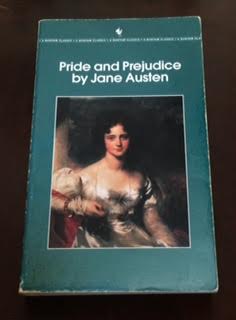
3) Pride and Prejudice by Jane Austen

 Pride and PrejudiceI was deep into the Baby-Sitters Club books when my sister introduced me to the wonders of Jane Austen. I was at an age when everything I did started to feel stupid and baby-ish, and felt like I needed to be reading things other than kids’ books (oh, budding adolescence). My sister had read Pride and Prejudice in one of her English classes and, promising I would like it, basically forced me to drop what I was reading one summer and pick it up. And I am so glad she ripped the BSC book out of my hands (speaking in hyperbole here), because reading Pride and Prejudice changed my world. It basically introduced me to the vast world of classic literature, and to the notion that there were a multitude of well-written, mature books in existence that I had no idea could be so readable and just so . . . good. I remember putting down the BSC books and never picking them up again (somewhat sadly, because I still think I developmentally should have continued reading them, but c’est la vie). Though Jane Austen is undeniably one of the best, the Bronte sisters speak a little more to my soul; however, I never would have had the pleasure of discovering this about myself had it not been for Jane Austen’s most acclaimed novel. I literally shudder to think of what I might be filling my head with now if I had never read Pride and Prejudice.


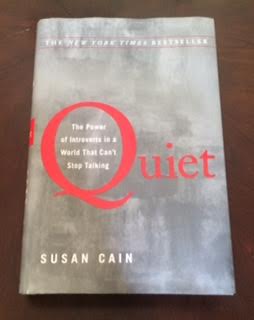
4) Quiet by Susan Cain

Quiet

This is arguably the most important book on this list to me. I am generally a pretty *quiet* person, but I absolutely love to talk to people about Quiet. I can honestly say that I am a completely different person after reading it. In 2013, at the tender age of 28, I finally stopped apologizing for who I am, and it is thanks to this book. To those who are closest to me, it’s old news that I’m shy and an introvert (the two are not synonymous), but this is usually at least a little surprising to people I’ve worked with or interacted with in social settings. I’ve gotten pretty good at hiding my true nature, mostly because I’ve spent my whole life (see: 27 years) exhausting myself, trying hard not to be shy and withdrawn in basically every school and social setting. In reading Quiet, I found out that I’m an HSP (highly sensitive person), innately shy, and an introverted introvert (there are indeed other combinations of extroversion and introversion, I’m just the furthest to the introvert side). And I no longer apologize for any of it, because I’m convinced that it’s how I was born. Though my parents thankfully never asked me to be anything other than myself, our extrovert-idealizing society did and still does demand other patterns of behavior from me. It was such a sad revelation to see that I had basically spent my life apologizing for who I am, and such a relief to accept that I didn’t need to do it anymore. I bet that almost any true introvert can relate to the feeling of shame that goes along with not wanting to go out with friends sometimes (or almost ever), or fearing working in an open office plan, or avoiding public speaking at all costs. The sort of self-acceptance I have experience is beyond measure. I’ve often said that I should be a spokesperson for this book, because it quite literally changed everything about my life. After many, many years, Quiet has helped me learn that there is nothing wrong with me, and I have finally made peace with the very core of myself


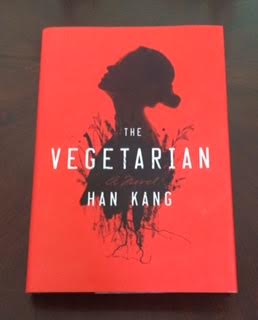
5) The Vegetarian by Han Kang

 VegetarianOkay, so the book itself is amazing, enough so that it inspired me to write a “professional-sounding” review that I’ve shared here on this blog. But on its own, the book would not necessarily have made this list (although it’s fantastic and probably the first piece of truly frightening literature that I’ve enjoyed as an adult). What is so personally important about The Vegetarian is that the review I wrote for it recently landed me my dream freelancing gig, which is reviewing books for a major publication. If finding out that your creative pursuits can get you work isn’t life-changing for an artist, I don’t know what is! Reading, writing, and getting paid to do both has been my dream for a very long time. My first review hasn’t been published yet, so I don’t necessarily want to say which publication I’m contributing to, but I’ll definitely share it here when I’m officially published. Needless to say, this book has changed my life and will always remain dear to me.


So those are my five life-changing books! I do, however, have to mention somewhere in this post . . . the Harry Potter series. Of course. I didn’t include it because I feel like EVERYONE talks about how it changed their lives, and I wanted to offer something different. For the record, though, Harry Potter is such an important series to me, for many reasons that would take far too long to list. Suffice it to say that growing up with this series has changed how I read, write, think about the world, and view others. It offers solace when I need it, and is always a joy to return to. It’s amazing that reading words on a page can make me feel like I’m going home, no matter where I am or how many times I revisit the story. What’s more life-changing than that?